.png)


For the LGBTQI+ community, the rainbow flag has become a symbol of freedom. However, during each Pride Month, different flags are seen in publications, advertisements, social networks and on the streets. This can be confusing for those who don't know these flags or their history, so we leave you, in alphabetical order, the meaning of each one.
Asexual Flag
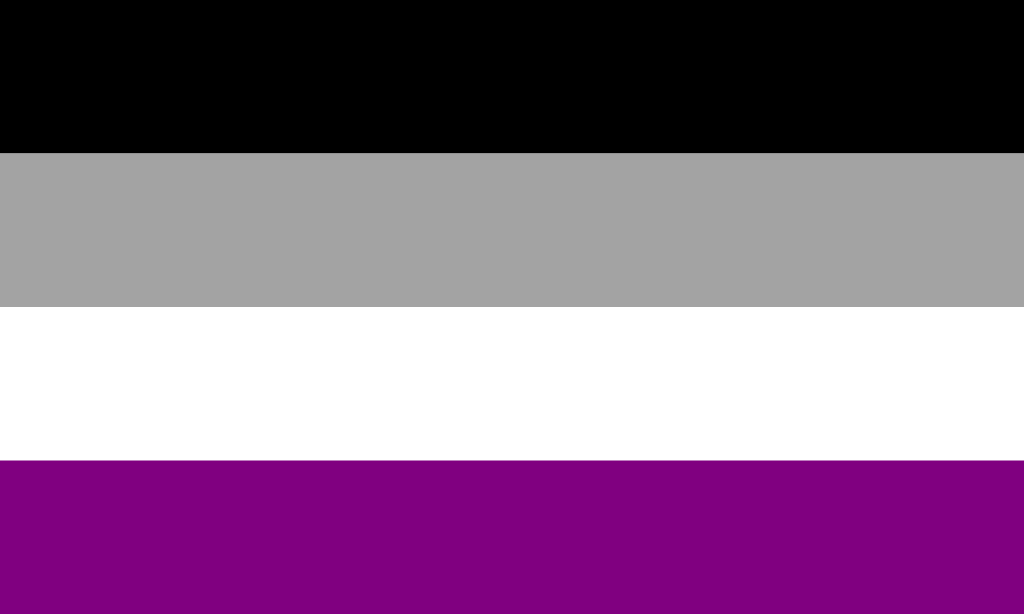
The asexual flag was created by the asexual community in 2010 through the Asexual Visibility and Education Network. The black color represents asexuality (not experiencing sexual desire), the gray color represents demisexuality (being able to experience only secondary, not primary sexual desire), the white color represents their political position in alliance with the LGBTQI+ community, and purple represents the entire asexual community.
Bisexual Flag

The bisexual flag was created by Michael Page in 1998. His concept was to mix pink and blue to create purple, representing that bisexual people mix in both the straight and LGBTQI+ communities. The colors of the flag are used to represent attraction to two genders: pink symbolizes attraction to the same gender, blue represents attraction to a different gender, and purple represents attraction to two or more genders.
Gay Flag

The Men's Gay Pride flag was designed in 2019, although it had preliminary versions. It arose from the need for its own flag, because due to the colloquial use of “gay” to refer to the entire LGBTQI+ community, for a long time the rainbow flag was used as a gay flag. On the male gay flag, you can see a clear influence of the classic lesbian flag; the two designs are very similar, and only vary in color. The colors turquoise and green represent community, healing and joy, and the color white represents gender non-conformism, non-binary people and trans men. The blue and purple colors represent pure love, strength and diversity within the community.
Gilbert Rainbow Flag (known as “the classic LGBTQI+/gay flag”)

The gay rainbow flag or classic LGBT flag was created in 1978 by Gilbert Baker, an openly gay artist, activist and veteran of the US military. Baker was commissioned by Harvey Milk to create a flag for the homosexual community, for which he created a rainbow flag with eight different colors. The flag was first flown at the San Francisco Gay Freedom Day Parade on June 25, 1978.
The intense pink color symbolizes sex, the red color represents life, the orange color represents healing, the yellow color symbolizes sunlight, the green color symbolizes nature, the turquoise color represents art and magic, the color indigo represents serenity, and the color violet represents the spirit of the LGBTQI+ community.
Intersex Flag

The intersex flag had many versions before the current flag appeared; previous versions featured a rainbow, while others used colors such as blue and pink. In 2013, Morgan Carpenter created the flag with yellow and purple colors, moving away from the symbolism of the rainbow. Those specific colors were selected because neither is associated with the social constructs of the gender binary.
The colors purple and yellow are used because they are considered neutral colors from a gender perspective. The circle represents the totality, fullness and potentiality of intersex people.
Labrys Lesbian Flag

This version of the Labrys lesbian flag was designed by Sean Campbell, a gay graphic designer, and first published in the 2000 Palm Springs edition of the Gay and Lesbian Times Pride issue. However, earlier versions of Labrys as a lesbian symbol were created by lesbian women in the 1970s.
The inverted black triangle refers to when the Nazis captured gay women and labeled them with black triangles because they were “social”. The violet background was associated with lesbians because of the poetry of Sappho of Lesbos; the poet described her lover wearing a garland of violets, which made violets a lesbian symbol for the community. Labrys represents the strength and feminism of lesbian women. Labrys also appear in Greek and Roman mythology, and often in depictions of warrior women such as the Amazons, who are considered a symbol of feminism.
Current Lesbian Flag

The current lesbian flag has undergone several changes over the past 14 years. It was originally created in 2010 by blogger Nataly McCray. It was originally created only in shades of pink and included a red lipstick kiss mark in the upper left corner, as it was directly intended to represent “lesbians with lipsticks”. In 2018, Emily Gwen created this version to represent diversity in the lesbian community. Because of its colors, it is also known as the “lesbian sunset flag”.
The darker orange color symbolizes gender nonconformity, the medium orange color represents independence, the lighter orange color represents community, the white color portrays unique relationships between women, the lighter pink color represents serenity and peace, the medium pink color represents love and sex, and the darker pink symbolizes femininity.
Non-Binary Flag

The non-binary flag, or enby flag, was created in 2014 by Kye Rowan to represent people whose gender identity doesn't fit the traditional male or female binary. The color yellow represents people whose gender is out of the binary, the color white, a color that consists of a mixture of all colors, represents multigender people, purple represents people whose gender identity is situated between male and female or is a mixture of both, and finally the color black, the absence of color, represents people who feel that they are genderless.
Pansexual Flag

The pansexual flag was created in 2010 by Jasper V. The pink color represents attraction to women, the blue color represents attraction to men, and yellow, which in the LGBTQI+ community is often associated with non-binary genders, represents attraction to any person regardless of their gender identity.
Flag of Progress

The LGBTQI+ flag of progress is the current most used version of the rainbow flag. Although it is based on new flags that were the subject of great controversy (such as the anti-racist Philadelphia flag), the community quickly embraced it and it has become the official flag of many Pride parades. The flag of progress was created in 2018 by Daniel Quasar. It contains the colors of the traditional Gilbert rainbow flag, a brown stripe representing racialized LGBTQI+ communities, a black stripe representing HIV-positive people (those living with HIV/AIDS), the trans flag, and the intersex flag.
The flag of progress includes an arrow to the right, which symbolizes looking to the future, making visible the people who started the movement: trans, racialized and HIV-positive people.
Trans Flag

The trans flag was created in 1999 by Monica Helms, a trans veteran. Helms created the flag strategically to make trans people unmistakable in a crowd: regardless of whether the flag is upside down or upside down, it looks identical.
The color sky blue represents what is traditionally associated with masculinity, while the color pink represents what is traditionally associated with femininity. The white color represents people in transition, or non-binary.
Flags don't take away from us: they are a symbol of unity in communities and a sign of the collective effort for inclusion. Always wear your flag with pride, if you find one that you like and represents.
.png)
.png)
.png)


